The Uncommissioned
The pursuit of art is something many people are drawn to and in many cultures it has been looked upon as something noble and worthwhile. It has intrinsic value; where the creation of the art itself is the main goal and everything else is secondary at best.
For the artist, it's a way to stop time, reflect and visit other worlds. It can be deeply personal and at its best communicate something others recognize in themselves. Despite all the joyful things about art, the artistic journey itself can be a difficult one. It requires patience, practice and a willingness to keep learning. It's also a uniquely individual pursuit and perhaps that's what makes it so interesting.
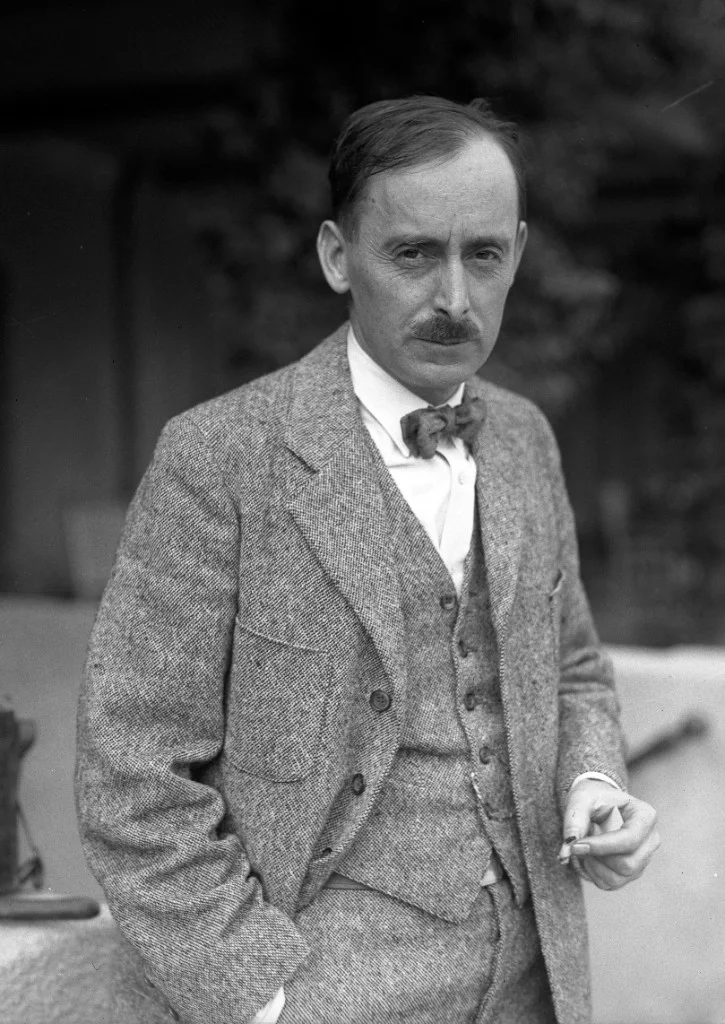
In the 1941 book Composition of Outdoor Painting, Edgar Payne talks about the importance of encouragement and how difficult the maze of learning art can be.
"Ironically enough, the beginner can never see or realize the most important thing he should remember, that is, a simple, naive manner of approach to both study and picturization must always be fostered." -Edgar Payne
Source: Composition of Outdoor Painting, p.131, 7th ED.
This is an interesting observation on how feedback and instruction can affect the development of an artist, both in positive and negative ways. On the subject of dealing with mistakes, Payne continues:
"Yet no student should ever be discouraged with such mistakes for they are part of the profession. The art of painting is a matter of seeing mistakes, overcoming obstacles and keeping fundamental principles always at hand." -Edgar Payne
Source: Composition of Outdoor Painting, p. 138, 7th ED.
Creating and sharing art can also be an emotional and personal experience and dealing with criticism is a balancing act between motivation and artistic growth. In many ways, growing as an artist is like climbing a mountain where you reach a goal, but then realize it's a plateau and you see another mountaintop further up in the far distance. Every plateau gets harder to climb.
Edgar Payne believed that the study of painting is the "art of thinking" and that an artist should remain open-minded, continually revisit what they have learned and seek new perspectives:
"The study of art is something that cannot be once completed and then set aside. Knowledge is never complete. Research and meditation are always the source of new ideas." -Edgar Payne
Source: Composition of Outdoor Painting, p. 20, 7th ED.
You can spend your life learning fundamentals, yet still discover new essential elements, patterns, techniques and artistic expressions. It's an infinite well of knowledge. Pursuing art is also in many ways like physical fitness; it requires resistance and mental clarity. It's a perishable skill, and can decay over time if not nurtured properly through practice.
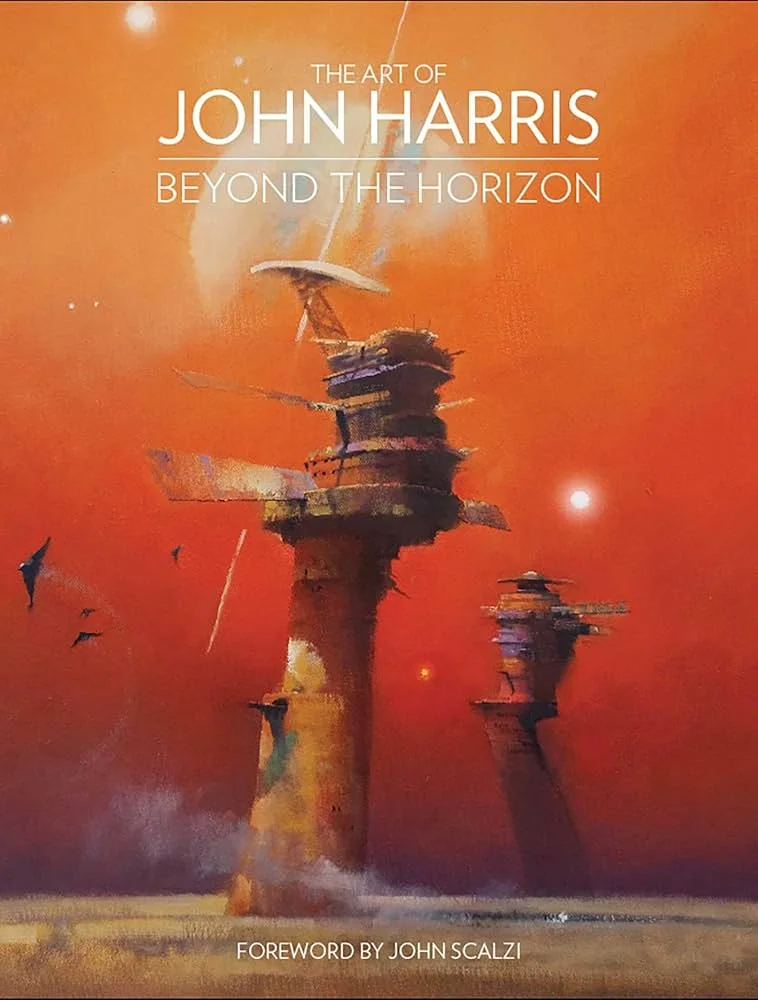
Even after decades of professional work, artist John Harris feels as though he's only just begun. When asked if he still had any artistic goals to chase, he replied with youthful optimism:
"I feel (like most artists, I suspect) that I've hardly started. And yet, looking at the collection in this book, I see that I'm travelling in a definite direction. But what the goal is, who knows? That's beyond the horizon." -John Harris
Source: John Harris, Illustrators' Lounge, June 25, 2014.
Another interesting idea comes from art teacher Robert Henri, quoted by Walt Disney in the short film
4 Artists Paint 1 Tree (1958).
"One of the great difficulties of an art student is to decide between his own natural impressions and what he thinks should be his impressions." -Robert Henri
Source: Robert Henri, The Art Spirit (1923), quoted by Walt Disney in 4 Artists Paint 1 Tree (1958).
This touches on another aspect of learning art. We are constantly exposed to other artists, ideas, opinions and styles. It is easy to be influenced and even limited by what we admire most and what we believe good art is supposed to be. Becoming a better artist is not just about learning the techniques of drawing and painting, but in many ways it is also about recognising and developing our own way of seeing things.
Where do art and imagination come from?
Creativity and imagination are inherently human qualities. But is there such a thing as a collective unconscious? Do we sometimes draw inspiration from something beyond our own individual experiences?
Carl Jung believed that beneath our individual experiences lies a deeper layer of the psyche containing universal patterns and images, which can find expression through art, dreams and mythology. Perhaps some of the images that emerge when we create are not entirely our own, but connected to something we share as human beings.
"By giving it shape, the artist translates it into the language of the present, and so makes it possible for us to find our way back to the deepest springs of life. Therein lies the social significance of art: it is constantly at work educating the spirit of the age, conjuring up the forms in which the age is most lacking." -Carl Jung
Source: Carl Jung, The Spirit in Man, Art and Literature, "On the Relation of Analytical Psychology to Poetry",
paragraph 130, p. 82 (1966 edition).
Joseph Campbell explored mythology and its connection to the human psyche. He saw myths as expressions of something deeper that humans share, drawing parallels between storytelling and our dreams. When asked what imagination is, Campbell replied:
“The imagination is moved by its own inward experiences, by your own inward experiences of the aspects of your psyche that are asking for fulfillment in your life.” -Joseph Campbell
Source: Joseph Campbell, The Power of Myth (1988), transcript of the conversation with Bill Moyers.
Artist John Harris has spoken about where his imagination comes from and about a feeling that has been with him since childhood:
"All any artist can ever do is try to express the heart's response to his or her world. Ever since I can remember, my awareness has been dominated by the sense of being on a world swimming through a vast unknown space. I don't know where this idea came from, or when it became a feature of my life." -John Harris
Source: John Harris, interview by Andrew Lasane, Complex, May 21, 2014.
What I find particularly interesting here is that Harris describes a feeling that seems to have existed long before he consciously understood it or began expressing it through art. It's almost as if the images were a way of exploring something that had already been living in his imagination for years.
He also talks about the importance of mystery and the value of not knowing all the details in an age shaped by AI. The unknown in many ways gives us freedom to imagine:
"One of the great joys of living, I think, is the mystery that surrounds us, you know? I don't want to particularly know the full details of anything, I really don't! The unknowing is part of the fun." -John Harris
Source: John Harris, interview with Andrew Liptak,
The Substance of Space and the Human Imagination, 15 Nov 2023.
Harris also reflects on his childhood habit of looking at cracks in ceilings and marks on walls and imagining spaces within them.
"There was this sense of illusions of depth which excited me, but I don't remember filling these voids with anything or any people. There's no doubt in my mind that this was a practice which honed my visual imagination, but it was a feeling I was after." -John Harris
Source: John Harris, interview with Andrew Lasane, Complex, May 21, 2014
This could suggest that imagination doesn't necessarily start with an idea or something specific, but can sometimes begin with just a feeling, a fascination or an undefined impulse.
Manufactured Realities
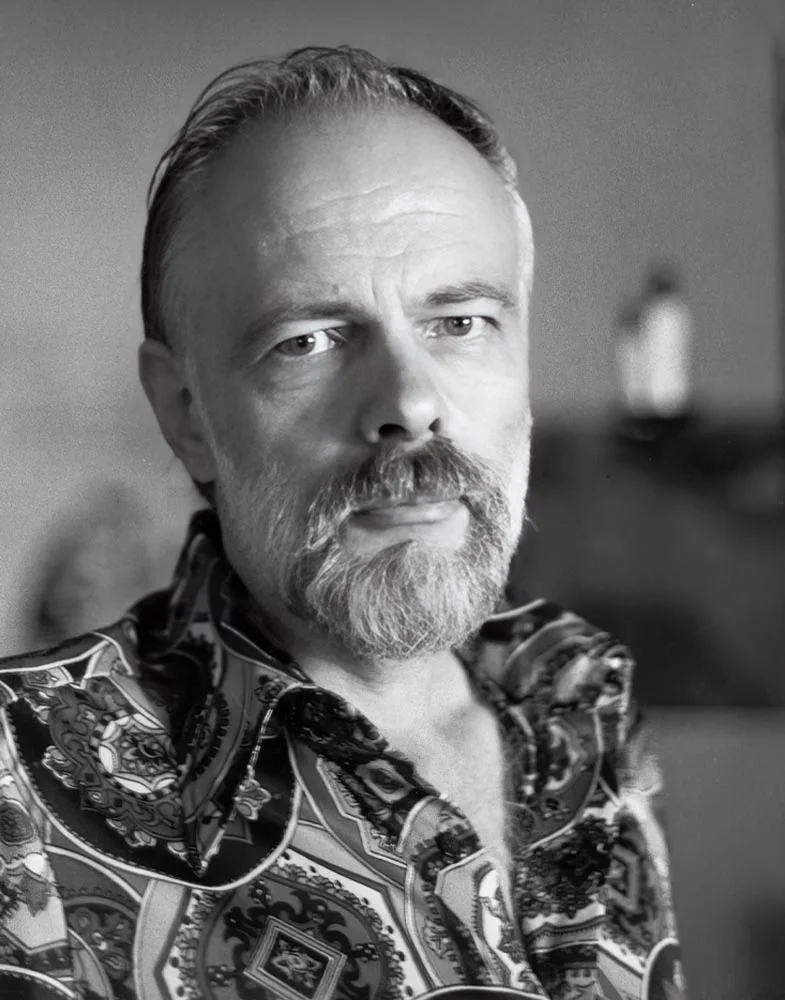
Science fiction writer Philip K. Dick saw the creation of fictional worlds as something powerful. An artist or writer takes things from their own experiences and memories and combines them into something that can exist in someone else's imagination. You create something that has never existed in the physical world and make it feel real to someone else.
In his essay How to Build a Universe That Doesn't Fall Apart Two Days Later (1978), Dick discusses the relationship between the worlds we create and the worlds we experience:
“So I ask, in my writing, What is real? Because unceasingly we are bombarded with pseudo-realities manufactured by very sophisticated people using very sophisticated electronic mechanisms. I do not distrust their motives; I distrust their power. They have a lot of it. And it is an astonishing power: that of creating whole universes, universes of the mind. I ought to know. I do the same thing.” -Philip K. Dick
Source: Philip K. Dick, How to Build a Universe That Doesn't Fall Apart Two Days Later (1978).
He also looks beyond fiction to the realities produced and distributed by media and other powerful institutions:
"But the problem is a real one, not a mere intellectual game.
Because today we live in a society in which spurious realities are manufactured by the media, by governments, by big corporations, by religious groups, political groups -- and the electronic hardware exists by which to deliver these pseudo-worlds right into the heads of the reader, the viewer, the listener." -Philip K. Dick
Later in the essay, Dick's reflections on manufactured realities and the people affected by them eerily mirror today's debate about generative AI:
“But I consider that the matter of defining what is real -- that is a serious topic, even a vital topic. And in there somewhere is the other topic, the definition of the authentic human.
Because the bombardment of pseudo-realities begins to produce inauthentic humans very quickly, spurious humans -- as fake as the data pressing at them from all sides. My two topics are really one topic; they unite at this point. Fake realities will create fake humans.” -Philip K. Dick
He continues:
“Or, fake humans will generate fake realities and then sell them to other humans, turning them, eventually, into forgeries of themselves. So we wind up with fake humans inventing fake realities and then peddling them to other fake humans.” -Philip K. Dick
Dick later takes the argument further, considering how language and perception can be used to shape people's understanding of reality:
"The basic tool for the manipulation of reality is the manipulation of words. If you can control the meaning of words, you can control the people who must use the words. George Orwell made this clear in his novel 1984. But another way to control the minds of people is to control their perceptions.
If you can get them to see the world as you do, they will think as you do. Comprehension follows perception. How do you get them to see the reality you see? After all, it is only one reality out of many." -Philip K. Dick
Reading this today, it's difficult not to think about how generative AI is changing our relationship with imagery, the creative arts, culture and information overall. Although the technology is different, the underlying question remains remarkably relevant. What happens when the ability to manufacture highly convincing realities becomes so accessible that almost anyone can do it?
The Motivation Behind Making Art
What can possibly motivate someone to make art? In his MasterClass series, David Lynch talks about the difference between making films for financial gain and following your own creative interests:
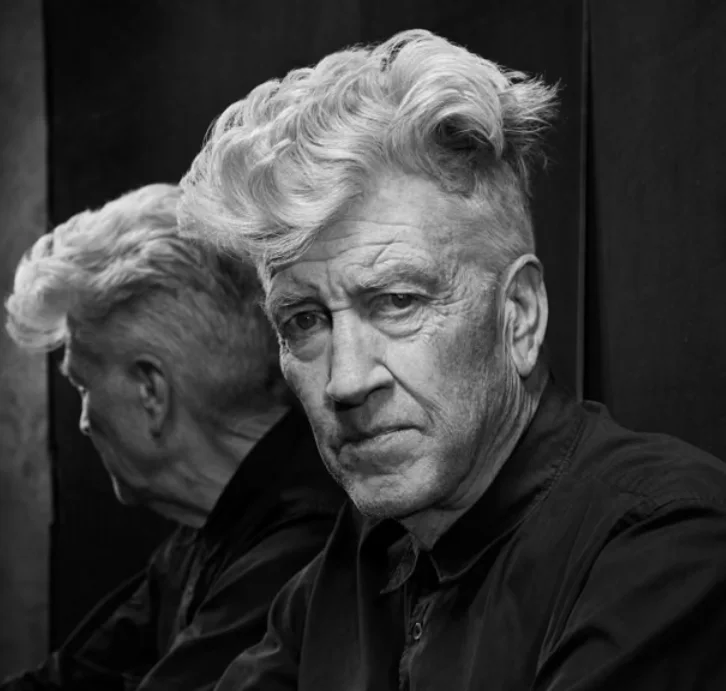
"In cinema, there are many filmmakers that make films primarily to make money, and that's more called entertainment. I'd love money like everybody else, but probably I'd do the things that I like to do for free." -David Lynch
Source: David Lynch, MasterClass.
Lynch believes in the importance of finding your own voice as an artist and protecting your creative freedom. While directing Dune in 1984, he learned this the hard way. He had no final cut and later described the experience as deeply painful. In his memoir Room to Dream (2018), he writes:
"You die once because you sold out, and you die twice because it was a failure." -David Lynch
Source: David Lynch and Kristine McKenna, Room to Dream (2018).
He contrasts this with Twin Peaks: Fire Walk with Me (1992). Although the film received a poor reception at the time and struggled commercially, Lynch felt differently about making it:
"You can live with yourself perfectly fine if you stay true to what you love." -David Lynch
Source: David Lynch and Kristine McKenna, Room to Dream (2018), p. 237.
Lynch was also approached by George Lucas to direct Return of the Jedi, the third Star Wars film. He declined because he felt it was Lucas's film and world. In an interview with BOMB Magazine, Lynch reflected on how both he and Lucas followed their own creative interests, but with very different audiences:
"I always say that I really believe that George Lucas or Steven Spielberg do what they truly love. They make the films they truly love. And it just happens that there are billions of people who like the same things they like. And there are others who make the films they truly love, but the audience is very small." -David Lynch
Source: BOMB Magazine, David Lynch by Michael Saur, July 18, 2013.
In another interview, Lynch summed up the difference between himself and Lucas with a little humour:
"George is a guy who does what he loves. And I do what I love. The difference is, what George loves makes hundreds of billions of dollars." -David Lynch
Source: David Lynch, interview at Hudson Union Society (2010). Published by Film89, September 7, 2017. Read the interview.
On how he became an artist, Lynch describes meeting Toby Keeler in eighth grade. Toby mentioned that his father was a painter. Lynch initially thought he meant a house painter.
His recollection in an interview with Hans Ulrich Obrist:
“At first I thought he meant a house painter, but then he said, ‘No, fine art painter’ and a bomb went off in my head. In that millisecond, I only wanted to be a painter.” -David Lynch
Source: On Memory, Chance and Intuition: David Lynch In His Own Words, interview by Hans Ulrich Obrist, AnOther Magazine (2014).
In the autobiographical documentary David Lynch: The Art Life, Lynch talks about how his interest in filmmaking began. He describes an experience while working on a painting that gave him the idea of a moving painting with sound. This eventually led to his first experimental film, Six Men Getting Sick (Six Times) (1967):
“And I was painting a painting about four-foot square. And it was mostly black, but it had some green plant and leaves coming out of the black. And I was sitting back, probably taking a smoke and looking at it. And from the painting I heard a wind. And the green started moving. And I thought, ‘Oh! A moving painting, but with sound.’ And that idea stuck in my head. A moving painting” -David Lynch
Source: David Lynch: The Art Life (2016), directed by Jon Nguyen.
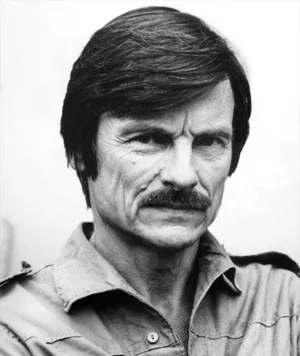
Filmmaker Andrei Tarkovsky had a poetic and deeply personal approach to filmmaking as an art. In the book Sculpting in Time (1986), he reflects on the purpose of art:
"In any case it is perfectly clear that the goal for all art—unless of course it is aimed at the 'consumer', like a saleable commodity—is to explain to the artist himself and to those around him what man lives for, what is the meaning of his existence. To explain to people the reason for their appearance on this planet; or if not to explain, at least to pose the question." -Andrei Tarkovsky
Source: Andrei Tarkovsky, Sculpting in Time (1986), Chapter II, "Art: A Yearning for the Ideal", p. 36.
Different people can have very different experiences and opinions when watching the same film. In Sculpting in Time, Tarkovsky talks about an equipment engineer from Kalinin who says that the film Mirror is unhealthy and that audiences don't need films like it. In contrast, Tarkovsky also describes receiving a letter from a woman who had been deeply affected by Mirror.
“Thank you for Mirror. My childhood was like that. ... Only how did you know about it?” -Woman from Gorky
Source: Andrei Tarkovsky, Sculpting in Time (1986), Introduction, p. 10.
Tarkovsky explains that these personal responses meant more to him than much of the professional criticism. They helped him understand what he was working for.
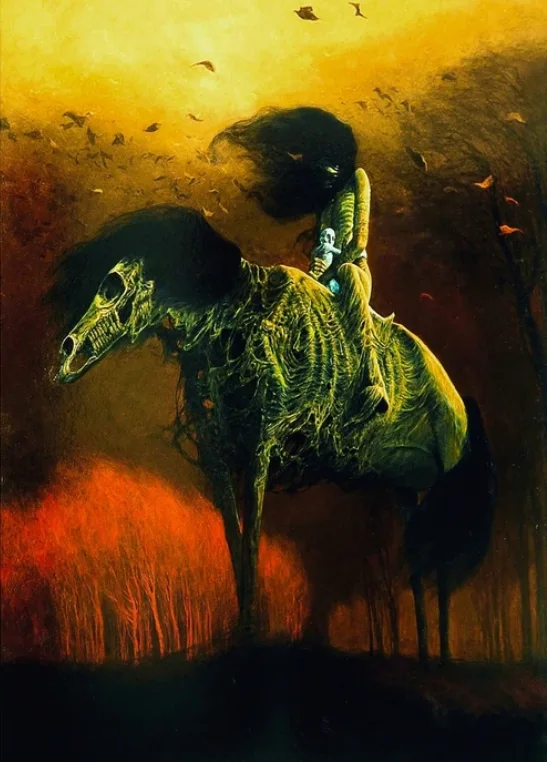
Zdzisław Beksiński had a rather different perspective on why he made art. Originally trained as an architect, he eventually turned towards painting, photography and sculpture. His paintings became known for their dark, surreal and often disturbing imagery. Yet despite the many interpretations people have placed on his work, Beksiński was quite dismissive of the idea that his paintings needed to communicate any particular message. He seemed much more interested in the act of painting itself.
"Painting pictures is a kind of subtle perversion. I do it for pleasure." -Zdzisław Beksiński
Source: Interview with Przegląd Tygodniowy, 2 July 1997. Original Polish interview. Translation from Polish.
He was also dismissive of the interpretations people attached to his paintings. In another interview, he explained that his work was not intended to criticise anyone or deliver a moral message:
"I am not trying to criticise anyone or even particularly observe the world. The world does interest me, of course. I am immensely attached to life." -Zdzisław Beksiński
Source: Robię to, na co mam ochotę, interview with Zdzisław Beksiński. Original Polish interview. Translation from Polish.
He went on to explain why he painted the subjects he did:
"I paint what I paint because certain landscapes and scenes simply interest me more and the reason for this isn't even obvious to me." -Zdzisław Beksiński
When Art Becomes Work
There is also a difference between making art for the pleasure of creating and making it as a profession. When art becomes work, creativity alone is not always enough. Ideas need to be developed, problems need to be solved and sometimes we need to step back and look at our own work from a different perspective. This is where design comes to mind. In simple terms, design is about organising and shaping elements to serve a specific purpose.
Working as an artist professionally also requires other skills, such as communication, organisation and speed. Here, you are on the clock, working for a client or company. You need to distance yourself from the work and learn new skills.
While some people in the modern world make a living from fine art, many others work as illustrators, VFX artists or video game artists. These professions are also becoming increasingly multidisciplinary, combining 2D, 3D, design and all kinds of technical knowledge.
The visual futurist Syd Mead had an interesting way of describing this. In the short documentary
2019: A Future Imagined (2010), he talks about how an artist needs to be three different people:
"Here's the core thing of creativity: you have to be three people. You have to be the person who's creating the idea and solving the problem, you have to be a technician who can solve the problem in a format that's usable, and you have to be a third person who is offstage watching those other two do what they do. If you can't detach yourself from what you're doing, you're not going to do good work. Hubris kills." -Syd Mead
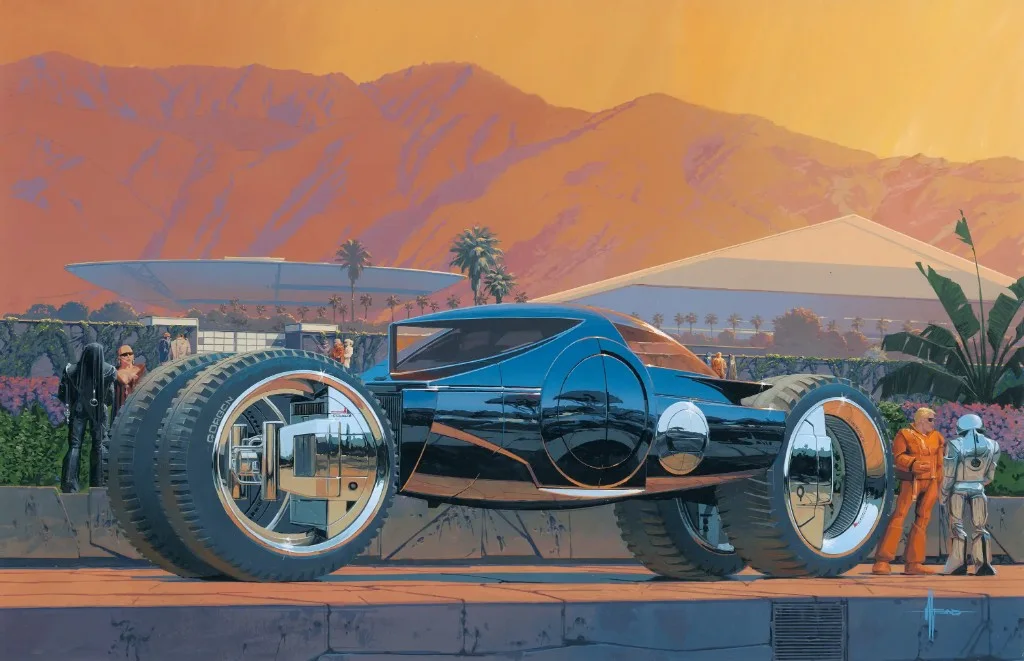
I find this last part particularly interesting. It is easy to become so absorbed in what we are creating that we lose the ability to judge it objectively. Mead describes the importance of being able to detach ourselves from the work and observe what we are doing, almost as an outside spectator.
He also had an interesting way of describing imagination itself:
"Imagination is essentially memory. It's putting different elements together in different combinations.
It's a process of arranging knowledge into new formats." -Syd Mead
What we create is often a combination of things we have already seen, experienced and learned. The more we expose ourselves to different things, the more material we have to draw from.
Perhaps this is also where the craft of making art comes into play. It is not only about having ideas or being able to execute them, but also about developing the ability to evaluate our own work and knowing when something needs to change.
Being critical and able to evaluate one's own work can be challenging. It's easy to become attached to specific ideas or decisions made earlier in the process. This makes it difficult to see the result objectively. "Too many cooks" is another expression that comes to mind here, where an original idea or approach can become watered down through what is often called "design by committee".
Marshall Vandruff discusses a way to approach this in the Draftsmen podcast, drawing on Edward de Bono's Six Thinking Hats. When it comes to self-critique, Marshall suggests using three of the hats in a particular order: blue, white and red.
The blue hat represents the big picture. What is the purpose of the work and what do we want to achieve? As Marshall puts it:
"The blue hat lays out the issues." -Marshall Vandruff
The white hat is about neutral observations, looking at the work without being biased by feelings. The red hat represents our emotional response. What do we prefer? What do we like or dislike? Marshall describes the relationship between the white and the red hats as having:
"both facts and feelings." -Marshall Vandruff
He also makes an interesting observation about how we tend to favour certain ways of thinking:
"Some of us go for the hat we're most comfortable with and maybe ignoring the one we need most." -Marshall Vandruff
His suggested order is quite simple:
"Start with the big picture, then give the facts then run with the feelings." -Marshall Vandruff
I find this to be an interesting way of approaching the process. We often get so involved in making something that it becomes difficult to see it clearly. Deliberately switching between these different ways of thinking can help us take a step back and evaluate our work from more than one perspective.
Marshall also makes a distinction between the role of intuition when creating art and when critiquing it:
"The red hat is very valuable for artists in making decisions about how to compose any work of art. It's very risky for critiquers and often useless but I think that great artists find their opinions for their work in themselves." -Marshall Vandruff
He continues:
"That seems what prompts people to be artists in the first place, is that I want to make the decisions according to how I like it." -Marshall Vandruff
What makes art and the pursuit of it so interesting is that there is no final destination or definitive answer to why some people are drawn to create. An artist draws from their experiences, their imagination and everything encountered along the way.
We can create to communicate something, to explore ideas or often simply because we enjoy it. Or, as Beksiński put it, because it's "a kind of subtle perversion". Even when creating art becomes a profession, one should not lose sight of that original fascination or impulse, the curiosity and desire to create that made us pick up the paintbrush or camera in the first place. Perhaps the uncommissioned work is where we are reminded of this the most.
Sources
- Edgar Payne, Composition of Outdoor Painting (1941), 7th ED. p. 20, 131 and 138.
- Robert Henri, The Art Spirit (1923), quoted by Walt Disney in 4 Artists Paint 1 Tree (1958).
- John Harris, Illustrators' Lounge, June 25, 2014.
- Carl Jung, The Spirit in Man, Art and Literature, "On the Relation of Analytical Psychology to Poetry".
paragraph 130, p. 82 (1966 edition). - Joseph Campbell, The Power of Myth (1988), transcript of the conversation with Bill Moyers.
- John Harris, interview by Andrew Lasane, Complex, May 21, 2014.
- John Harris, interview with Andrew Liptak, The Substance of Space and the Human Imagination, 15 Nov 2023.
- Philip K. Dick, How to Build a Universe That Doesn't Fall Apart Two Days Later (1978).
- David Lynch, MasterClass.
- David Lynch and Kristine McKenna, Room to Dream (2018). p. 237.
- BOMB Magazine, David Lynch by Michael Saur, July 18, 2013.
- David Lynch, interview at Hudson Union Society (2010). Published by Film89, September 7, 2017. Read the interview.
- On Memory, Chance and Intuition: David Lynch In His Own Words, by Hans Ulrich Obrist, AnOther Magazine (2014).
- David Lynch: The Art Life (2016), directed by Jon Nguyen.
- Tarkovsky, Andrei. Sculpting in Time: Reflections on the Cinema (1986). Translated by Kitty Hunter-Blair. Introduction, p. 10. Chapter II, "Art: A Yearning for the Ideal", p. 36.
- Zdzisław Beksiński, interview with Przegląd Tygodniowy, 2 July 1997. Original Polish interview. Translation from Polish.
- Zdzisław Beksiński, Robię to, na co mam ochotę, interview. Original Polish interview. Translation from Polish.
- Syd Mead, 2019: A Future Imagined, VICE (2010).
- Marshall Vandruff, Draftsmen S2E29 - How to Get Useful Feedback and Learning to Self Critique.
Copyright and attribution
This is a personal, non-commercial essay written for discussion and appreciation of art and creativity. All quoted material and referenced artwork remain the copyright of their respective creators or rights holders. Sources and original creators are credited wherever their work is referenced.
If you are a copyright holder and have concerns about how your work is referenced or reproduced here, please get in touch. I'm happy to discuss the matter and make any necessary corrections or removals.